

SEO best practices are important for any ecommerce site. Search engine optimization can boost your keywords, improve product rankings, and increase your overall online visibility.
When it comes to getting your ecommerce products or services in front of as many potential customers as possible, SEO best practices are easy to implement. The best part is that SEO is free.
Ecommerce in the UK is big business with the percentage of sales shares the highest among all other countries at 17.8 percent in 2017.
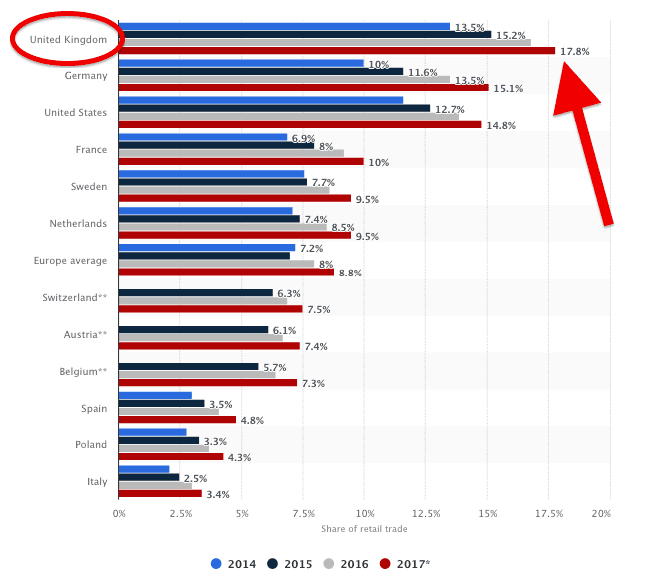
This is a steady increase, and if you want to get your slice of the ecommerce sales, it is time to thing search engine optimization for powerful results. The following are a few SEO best practices to keep your ecommerce site highly profitable in the years to come.

In 2018, Google mobile-first index is expected to go into full affect, according to Google Webmaster trends analyst Gary Illyes. This makes mobile search optimization essential for all, but especially for ecommerce sites.
More consumers are turning to mobile to find and purchase products, and with mobile SEO a priority, you’ll be ready.
Here are a few mobile-friendly SEO tips . . .
- Think user experience. Ensure your ecommerce site looks good on mobile and is very easy to navigate.
- Pages with pop ups and other distractions will be held back when it comes to mobile ranking.
- Use easy to read, mobile-friendly text size and fonts.
- Don’t use software that is incompatible with mobile, like Flash.
- Ensure your mobile load time for your ecommerce pages are less than one second.
Is your ecommerce site mobile-friendly? Utilize the below tools from Google to check, troubleshoot, and fix . . .

Creating unique product page titles can be challenging, especially for larger ecommerce sites with a wide range of similar products. This can cause duplicate content and page title problems that hurt rankings in SERPs.
However, there is a solution. To get your products in from of more users, you can employ a keyword SEO best practice.
First, make a list of all your product page titles and identify any duplicate keywords. Once you have that, pull up SEMrush’s Phrase Match tool to switch the duplicate keywords up.
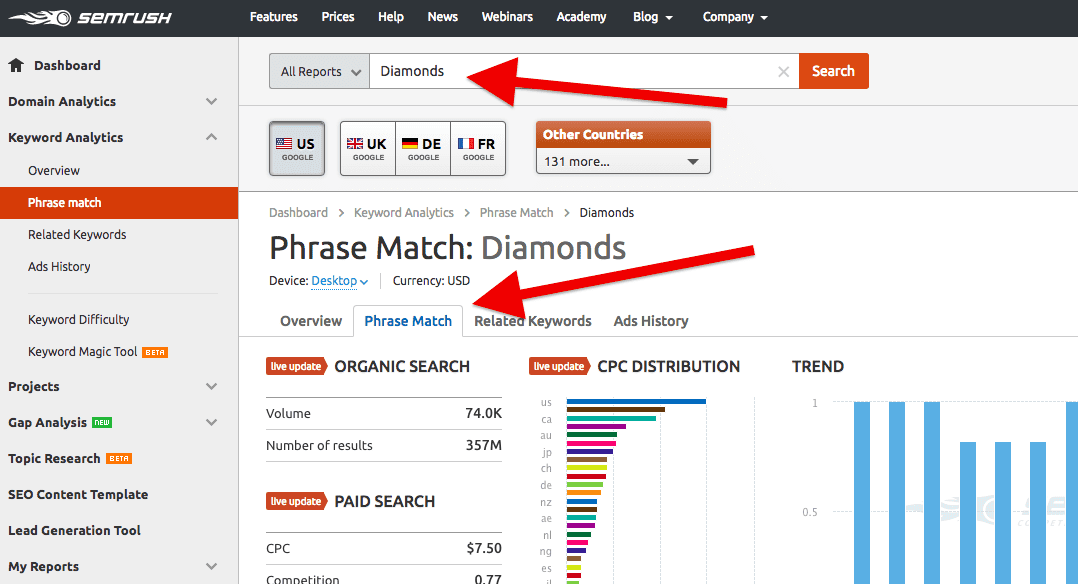
Your page titles should look something like . . .
Brand-Model-Item Type-Color-Size
This is just an example. Your industry or niche will guide you toward the best formula for your specific ecommerce products. For example, a jewelry ecommerce site like Brilliance will have a number of very similar products.
By using the above method they made a number of similar product pages far more unique and searchable.
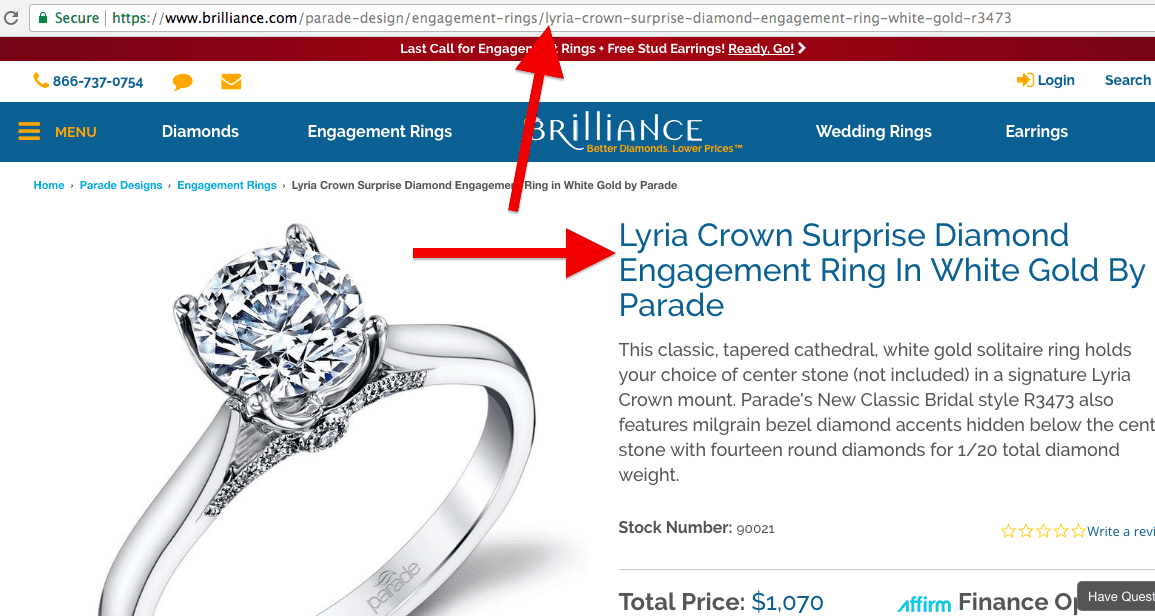
Making your product SEO titles specific and unique will help Google and other search engines quickly identify the page and match quickly with the searcher’s intent.
Adding a variety of keywords will also increase your online visibility since you will rank in SERPs for more of them as well.
Don’t Forget About Schema Markup
One of the SEO best practices many ecommerce sites forget to implement is schema markup. What is a schema markup? Good question.
By placing rich snippets that Google recognizes into your product pages will make them easier to understand, allowing the pages and products to be displayed more accurately.
These rich snippets can be integrated into pages for products, software, events, recipes, reviews, and more. You can even leverage schema markups for local listing rankings as well.
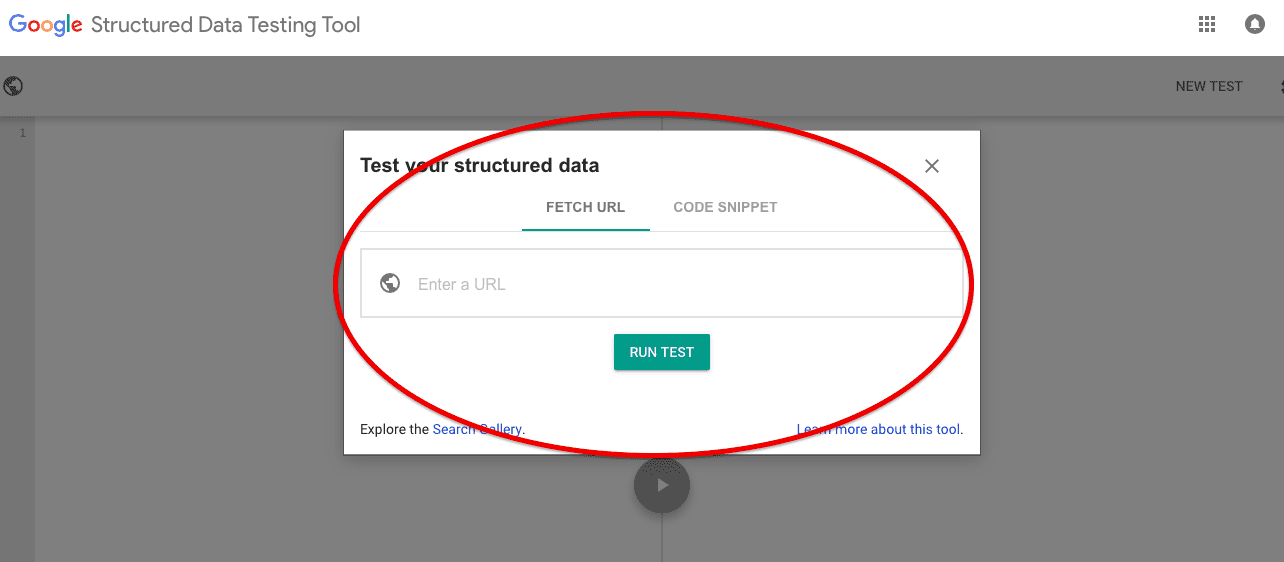
If you want to see the structured data and markups you have in place, and opportunities for optimisation, you can utilise Google Structured Data Testing Tool.
It’s Your Turn . . .
Maximize your ecommerce site’s potential by making SEO best practices a priority. You will make your pages easier for Google to understand, and in turn make them far more accessible in SERPs.
From phrase matching keywords to helping search engines understand your page better via schema markups, your 2018 can be a year of growth and success with SEO. What optimisation best practices will be your New Year’s resolution?